

When my wife and son flew to Uganda, my three months began. I’d decided to do every job in the house, however badly, under one rule that I now think saved my marriage: better to do a thing badly than not at all.
I’d spent my whole adult life hiding behind “I wasn’t taught” and “I don’t know how.” It was a remarkable position for a man who could teach himself a programming language over a weekend but had somehow decided the washing machine was beyond him. The new rule was blunt. Every job here needs doing. Anything done beats nothing done. So I would do it in my own strange way and let it be wrong.
Those three months alone were rehearsal without an audience. I cooked for one and cleaned for one, and learned how many jobs a house can hide, every one invisible to me until it was mine. Then they came home, and the real test began, the same rule, with witnesses.
I started with Delvin’s bedtime, the chaos at the centre of everything. He had no routine. The thinking at the time was that he was a child and shouldn’t be boxed in, so the nights ran long with no fixed end and he would fall asleep when he was tired. I borrowed a method from Jordan Peterson, find what the child loves, then trade it for the hard thing. Delvin was deep into Cars at the time, collecting the characters, so I spent fifty dollars on ten of the mystery toys. The deal was simple. Every night he went to bed by seven and stayed in his room till morning, a toy would be waiting for him. He managed to redeem two before losing the streak on the third night. I kept him going with treats and desserts and stories at bedtime, and by the seventh day the habit had him.
A couple of months later we were on the couch after he’d gone down, watching something together for the first time in a long while. Phiona paused the show and asked, “Do you notice how quiet the house is?”
I did, and said, “It’s because Delvin’s asleep.”
This was an epiphany. I realised the evening could be shaped. The day could be built. A whole life, maybe, made the same way, so that everyone, the two of us on the couch included, got something from it.
Then came the moment I think of as the real thaw. A few months after they came home, one day I heard Phiona tell Delvin to go and ask me to help with the dishwasher. It was the first time she’d handed me credit, out loud, for being good at something in our home. After all the fights about how I did everything wrong, she sent our son to me as the one who knew how to do this one thing right. I felt something close to ecstatic.
So I kept going. The spare room was drowning in unfolded washing, so I watched Marie Kondo, learned to fold, and found that with an audiobook running, I could fold for hours, sorting everyone’s clothes into their own piles so each of us could easily find our own. I went after the grocery waste like an investigation and made a rule that you could have whatever you wanted as long as you didn’t waste it, and we stopped binning food and stopped buying things nobody ate. I wasn’t much good at cleaning the house, so one day I bought a robot vacuum without asking anyone, set it up, and started using it. Weeks later, Phiona asked if I’d show her how to put it on, and another day, asked if I’d carry it upstairs to do the other rooms. My odd little fixes were becoming ours.
Then we got a new problem, and I loved it.
One night, I came through the dark house to the kitchen for a glass of water and found Phiona at the sink, sleeves folded up, scrubbing saucepans under the only light still on. I asked why she was doing pots at midnight. She said flatly that if she didn’t, I would, and she didn’t like how I did them, so she’d rather do them herself.
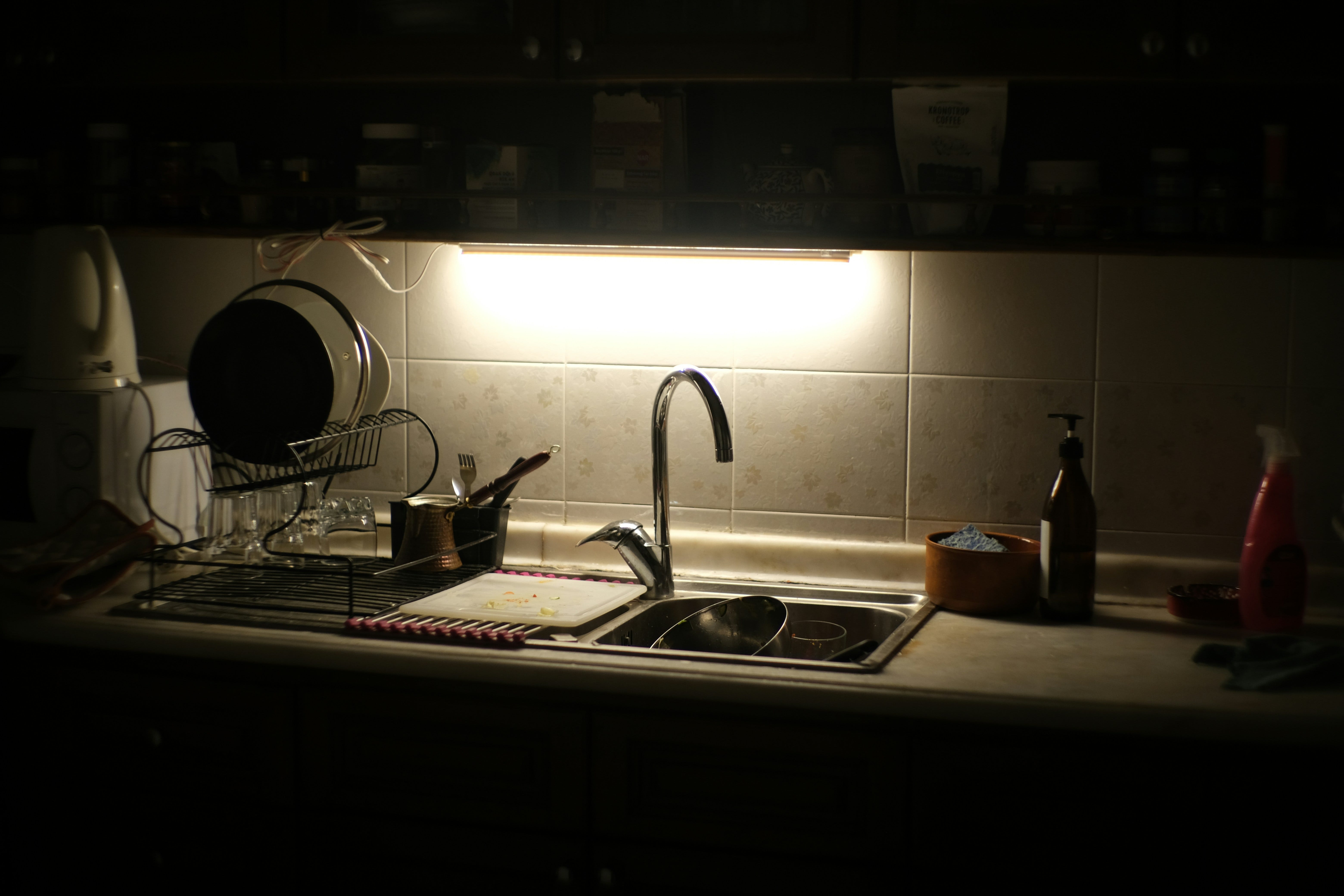
A year before, that would have been a complaint about me not pulling my weight. This was different. The fight had moved. It was no longer about who does the work. It was about how the work gets done, which only happens once both people are finally inside it. We had started getting to the jobs early just so we could each do them our own way. We were both holding the house now.
Where you have to stand
Years before Phiona, a woman I loved left without a word of explanation. I never got the missing half of that conversation, and I didn’t know how to stand in front of a silence, so I wrote over it, a whole story of reasons she never gave me. I had been doing some version of that ever since. Wherever someone’s meaning didn’t come easily, I supplied my own and called it understanding. Though really it was more like over-standing, if you get my meaning.
So for years I’d been standing over my wife. Over her words at that lunch, picking through them for the answers I’d already written. Over the chores, certain my way was right and hers was friction. Over the marriage, waiting for it to deliver.
I didn’t fix that with a technique. I fixed it by changing where I stood.
There’s an old wordplay hiding inside the word understand. To understand a thing is to stand under it, the way you stand under a shelter you trust not to fall on you. You stand under it because you trust it, and you come to trust it by standing under it. To over-stand is the opposite, to climb on top of the thing, poised to jump clear the moment it cracks. Two completely different ways of meeting the thing you’re trying to know.
I’d been doing the reverse of understanding, standing over Phiona and reading her as wrong. Most of what I’d been calling misunderstanding was really mis-standing-under: I was standing in the wrong place, then blaming the view and the meaning I’d made of it. This was never about who ranks above whom in a marriage. It was about where you have to put yourself to see. Like one of those optical illusions that stay noise until you find the right focus and the hidden picture is revealed, Phiona became clearer to me once I stopped insisting she was wrong and started looking for the place where her way made sense.
Later, I’d find words for why it had been so hard. People carry something like an immune system against being made wrong. Put someone in the position of being wrong, and it lands like a threat to their life, because their reality is a real thing they have to stand up for. Every argument I’d “won” had tripped that alarm in her. I’d been telling my wife, in small daily doses, that she didn’t exist, and calling it communication.
When I stopped, she came back. The cold, withholding woman I’d built in my head dissolved, and the actual person stood there instead, with her reasons and her standards and her own competence. I could see her frustrations and where they came from. I could help.
I’d gone to that lunch sure that my problem was the wrong wife. My problem was that I’d never taken up the work of making the thing I wanted. I’d wanted a marriage the way you want good weather, as something that should just arrive. The loneliness in my full house wasn’t the love running out. It was the sound of a home nobody was writing.
The way back from that kind of loneliness isn’t a better partner. It’s becoming the one who tends the thing. I’d been the author of my career and a guest in my own family. I put the pen down at work and picked it up at home, and the marriage I’d been waiting to be handed, I slowly began to write.
Questions to carry
Where are you a guest in something you’re meant to be authoring? What have you handed to someone else, then judged them for failing?
The last time you “won” with someone you love, did you go looking for the place their way made sense, or did you just prove them wrong?
What job have you been refusing because you “don’t know how”? What would it cost to do it badly today, rather than not at all?
