

It started with a domestic squabble over an umbrella.
It was a school morning—the kind that feels like a relay race against the clock. We were preparing for a school drop-off when we noticed the rain starting to come down. My wife, Phiona, asked where the big umbrella was.
“It’s in the small car,” I said, pointing outside to the driveway where the rain was already falling.
She looked at me with raised eyebrows and wide questioning eyes—the ones that ask, Well… who is going to get it?
I called out to my son, Delvin.
“Go grab the big umbrella from the grey car.”
“No, he can’t go!” Phiona interjected immediately.
“He’s already dressed for school. Why don’t you go?”
I was baffled. My mind—operating purely on efficiency—registered this as an unnecessary friction. Running ten meters to collect an umbrella was a simple task, this is how I was brought up, you just did what the parent asked of you. I thought she was mollycoddling him. I thought, What’s the big deal? It’s just water.

But I decided to lead by example. I sighed, stepped out the door, and ran to the car.
The rain was cold. It soaked my hair immediately, seeped through my shirt, and chilled my skin. I opened the car, grabbed the umbrella, slammed car door shut, locked the car, and ran back. As I walked back into the house, dripping wet, something strange happened.
A thought stopped me in my tracks—suspending the rush of the morning like someone had pressed pause.
I realised:
My skin is wet.
My shirt is wet.
My hair is wet.
But I… am dry.
The Illusion of the Monolith
Before that moment, I lived inside what I now call the Merged View.
In the Merged View, you and your body are a single solid block of stone.
When the body is hungry, you say, “I am hungry.”
When the body is anxious, you say, “I am anxious.”
The sensation doesn’t just visit you—it becomes you.
You don’t just have a problem; you are the problem.
But standing there in the hallway, dripping onto the floor, I experienced a sort of Differentiation, some kind of “split”.
I could feel the rain on my skin—but the I feeling the rain was different from the I witnessing the experience of this feeling. I was the witness, the observer.
This wasn’t dissociation (where you go numb). It was the opposite: a clearer relationship. I wasn’t the body. I was the one in relationship with the body. The body was like a machine and I was the pilot of that machine.
The Astronaut and The Suit
That moment gave birth to the core metaphor of what I call the Embodied Steward. It seemed to me that I was an embodied steward and I had a role to play.
Imagine an astronaut inside a spacesuit.
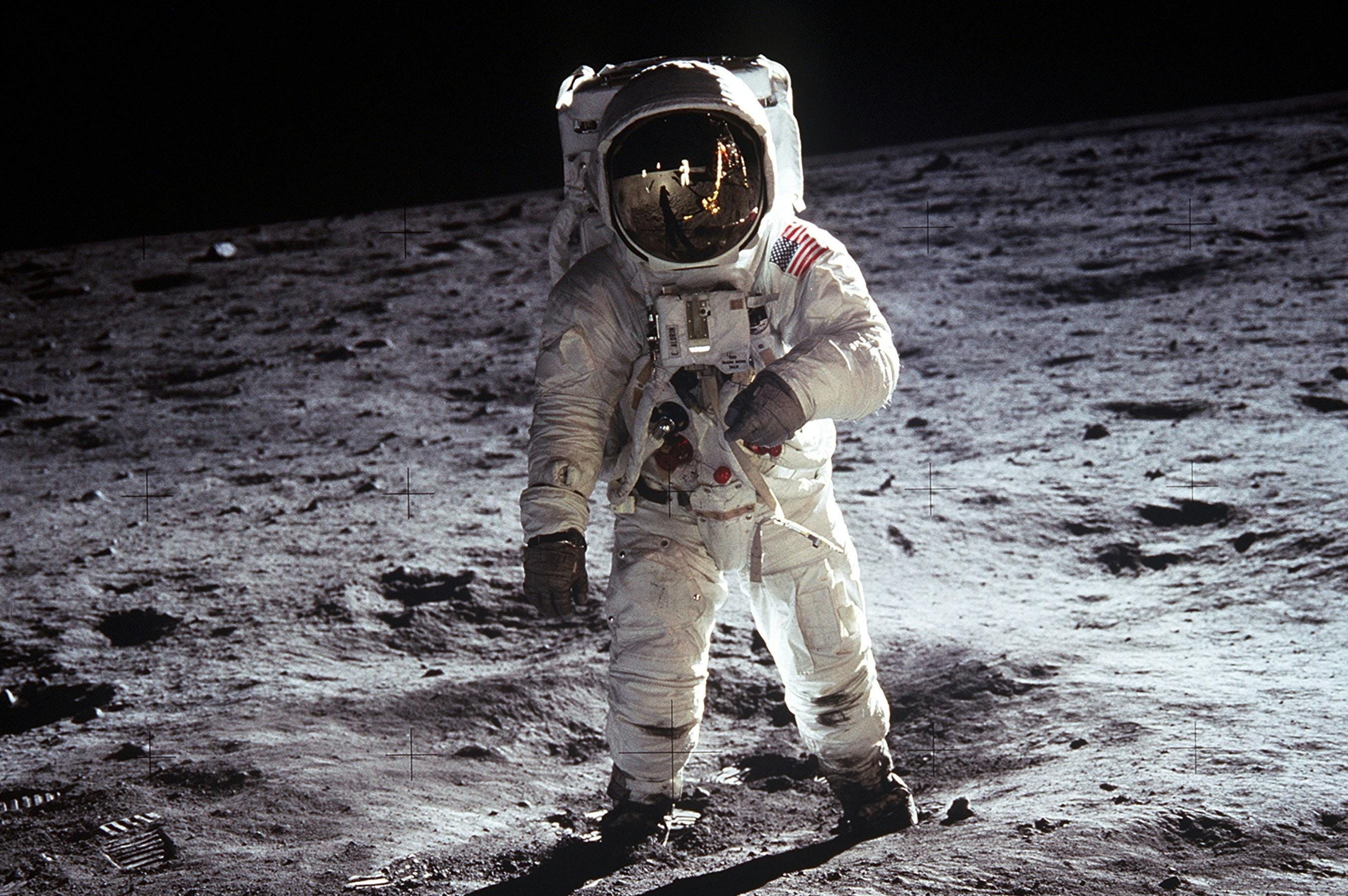
The Suit (Your Body) is wildly intelligent. It runs automated systems for temperature, digestion, immune defense, balance, and repair. It is built to interface with a harsh physical world without asking your permission.
The Astronaut (You) is the consciousness inside—the part that can notice, interpret, choose, and aim. Your job is not to be the suit. Your job is to check the gauges, read the signals, navigate the terrain, and keep the suit in a good enough condition for the mission to continue.
When I ran into the rain, the suit got wet but the astronaut—the steward—remained dry.
This distinction changes everything. If you believe you are the suit, then every scratch, pain, fatigue, or mood swing feels like an existential crisis. But if you are the steward of the suit, those signals become information. They are dashboard lights. A language. A set of requests.
The Body that built The Steward
But if I’m the astronaut… where did I come from? I wasn’t parachuted in from the sky.
Biology offers a more beautiful answer: You were built by the Suit.
Your body is not one thing. It’s a community that operates on multiple levels and each level has multiple layers within it.
It starts with cells negotiating and organising themselves to build tissues. Tissues collaborate to build organs. Organs coordinate to build systems. At every level, the biological system solves the problem of its own complexity by generating a higher level of coordination.
And when the complexity of managing a whole human life becomes too high for simple reflexes—when we need to plan for tomorrow, navigate relationships, and inhibit impulses—the body generates a final layer. It generates You.
In my language: The body generates a Steward to solve the problem of its own complexity. You are the solution your body came up with to deal with problems outside of it. Problems that arise in the chaotic environment within which the body dwells.
Missing the Point
If you are the Steward, what is your actual job?
Years ago I tried to explain the concept of “sin” to Delvin using his archery set. I told him that the ancient word for sin (hamartia) didn’t mean “evil”; it meant “missing the mark.”

Think of your attention as the arrow. Think of your values as the target. The steward’s job is to decide what is relevant—to aim the arrow of attention at the thing that matters most.
And in that umbrella moment, I was missing the mark.
I was aiming my arrow at efficiency: get the task done quickly.
My wife was aiming her arrow at care: protect the child’s state before school.
She wasn’t being difficult. She was being a better steward. She understood the assignment.
Fore-giving: Love With Foresight
This brings me to one of the most practical tools in the steward’s kit: Fore-giving.
We usually think of forgiving as something you do after a mistake. Fore-giving is what you do to avert the mistake.
It is anticipatory care. Love with foresight. The ability to notice the gauge dropping and fill the tank before the warning light comes on.

The Pilot drives the car until it runs out of fuel, then curses the car.
The Steward watches the gauge, and quietly stops at the fuel station.
My wife was practicing fore-giving. She was keeping Delvin dry now so he wouldn’t be cold and miserable later. She was loving the future version of her son.
The Steward’s Log
I walked back into the living room that morning with a wet shirt—but a clearer mind. I handed my wife the umbrella. I didn’t say much, but the irritation was gone.
I looked at my son—dry and ready for school. I looked at my wife—who had instinctively protected him. And I realised I had been treating my family (and my own body) like machines to be operated... while she was treating them like vessels to be stewarded.
I shivered as the cold water seeped through my shirt. This time I didn’t ignore it. I noted it. The suit is cold.
“I’m going to go change,” I said.
I wasn’t just a guy getting dry. I was a steward taking care of his gear.
Questions for the Steward
Instead of a to-do list, here are a few questions to carry with you this week:
The Monolith: Where are you saying “I am...” when you should be saying “My body is reporting...”? (e.g., “I am hungry” vs. “My body needs more fuel.”)
The Aim: In the stressful moments of your day, what are you aiming your arrow at? Are you aiming at Efficiency, or are you aiming at Care?
Fore-giving: What gauge is dropping in your life right now? What would it look like to fill the tank before the warning light comes on?
