

You met my father in the last essay, the man in the kaunda suit I mostly saw from a distance, sparing with words, generous in ways he never announced. That was the portrait. This is what it made of me.
It took me most of my adult life to see the obvious. Everything I have been slowly learning to do, the showing up at home, the building of a family, the keeping of a Sunday tradition, I learned from him. He was the storifier of our household, and his quiet genius was to do it where no one could watch. He taught me, without a single lesson on the subject, how to love without taking the credit for it, and how to lay foundations the way foundations are laid, to be stood on, not seen. He authored a family for decades and never once took a bow. I spent this whole series describing work like that as though I’d discovered something. I discovered nothing. It was given to me by my father, who embodied it as he raised me, long before I had a word for any of it.
Years later I coined a word, fore-giving, for the grace you extend to a person before they’ve become the one who deserves it. My father had been doing it at every departure of my life, a blessing sent ahead of me down a road he couldn’t see. He just never needed the word.
But I have not kept all of it. I have set down the owl that had to be shooed from a sick child’s window and the women who couldn’t be met on the road. They were how a careful man tried to protect the people he loved in a world that felt thick with hidden forces. They are not the world I live in, so I let them go. I set down the distance, too. I am inside my children’s ordinary days far more than he was ever inside mine, and that is a deliberate revision, not a betrayal. He gave me everything he had been given. I happen to have been given more, and the kind thing to do with more is to use it.
And the thing I treasured most, I kept by changing it. He prayed over us before bed and before every departure. We pray before bed in my house too. But we have added a “Hey,” stolen shamelessly from Spider-Man: Into the Spider-Verse, a playful call-and-answer we give each other as we tuck in, and Delvin and Serena demand it now, every night, no matter what. It is the same root my father planted, grown into a branch he would not quite recognise, and that is exactly as it should be. A tradition is not a museum piece but a tool, and a tool gets worn to the shape of the hands that hold it. My father’s prayer is alive at my children’s bedside precisely because we didn’t embalm it.
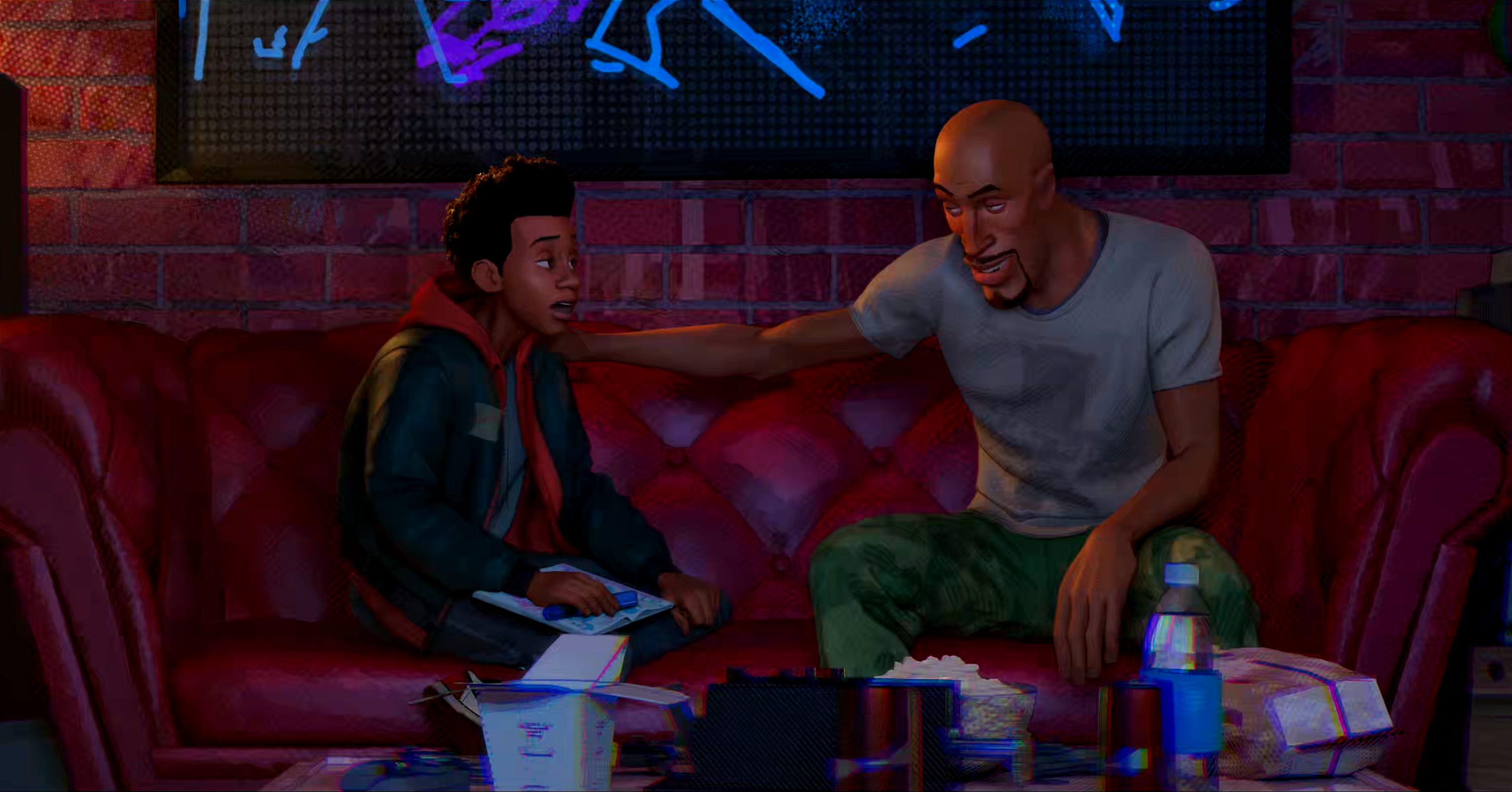
This is the work at its widest scale, the one that runs across generations. You don’t inherit a whole world and keep it under glass, and you don’t throw it out and start from nothing. You go through what you were handed, you keep the gold, you set down with respect what no longer serves, you remake what you can, and you pass it on still warm. My father handed me the instinct to author a family without needing to be thanked for it. I am handing my children a prayer and a “Hey”.
And the prayer was always pointing somewhere. Past me, past him, toward the larger thing he made himself small in front of, all those mornings before a journey. That is where this story has been headed the whole time. But there is a harder essay that has to come first. Because I have told you the truth about my father, and I have not told you all of it.
Questions to carry
What did you memorise from a parent before you could name it? Have you named it yet?
What are you keeping under glass that you could remake and actually use? And what are you refusing to set down out of loyalty?
What will your children inherit from you without knowing it was chosen? Have you chosen it on purpose?

Hey bro, I am enjoying your stories on fatherhood. It’s clear your Dad was a man of strong upright character. I am looking forward to the next one. 👏🏿