

I used to think I had to teach my family how to live well. I had the framework and I understood the theory; I’d read the books, listened to the podcasts, and worked through the philosophy. I knew about embodied stewardship, about fore-giving, about managing the two ledgers, so naturally, I tried to explain it to them.
Whenever we argued about a health-related incident, I’d try to talk to Phiona about the body as an economy. I’d use the umbrella story to illustrate fore-giving and the zigzag story to explain veto power. I’d get animated, gesturing at the air like I was drawing diagrams only I could see, certain that if I could find the right words, she’d feel what I’d felt when it all clicked for me.
She’d nod politely. “That’s nice, sweetie.” And then she’d pat me on the knee as she got up and headed back to continue what she was doing before. I’d sit there with my hands still mid-gesture, watching her walk away, and feel that particular deflation of someone who came in for a high-five and was left hanging.
My children were even worse. Try explaining Michael Levin’s cellular bioelectricity to a ten-year-old, or getting a six-year-old to understand the Frame Problem; their eyes would glaze over within thirty seconds, and I’d hear myself talking faster, louder, as though speed could compensate for the gap between what I was seeing and what they were receiving.
And then one morning, I watched my wife apply lotion to her body, and I realised I’d been doing this completely wrong.
The Lotion Ritual
Phiona has this ritual she does almost every morning after her shower. She sits on the edge of the bed, wrapped in a towel and applies lotion to her entire body. It takes about fifteen, maybe twenty minutes, and for years, I thought it was vanity, skincare, something women do.
But that morning, I was still in bed and had nothing pressing to attend to, and I actually watched her. Really watched. The bedroom was quiet except for the sound of her palms rubbing on her skin and the faint clicking of the lotion bottle.
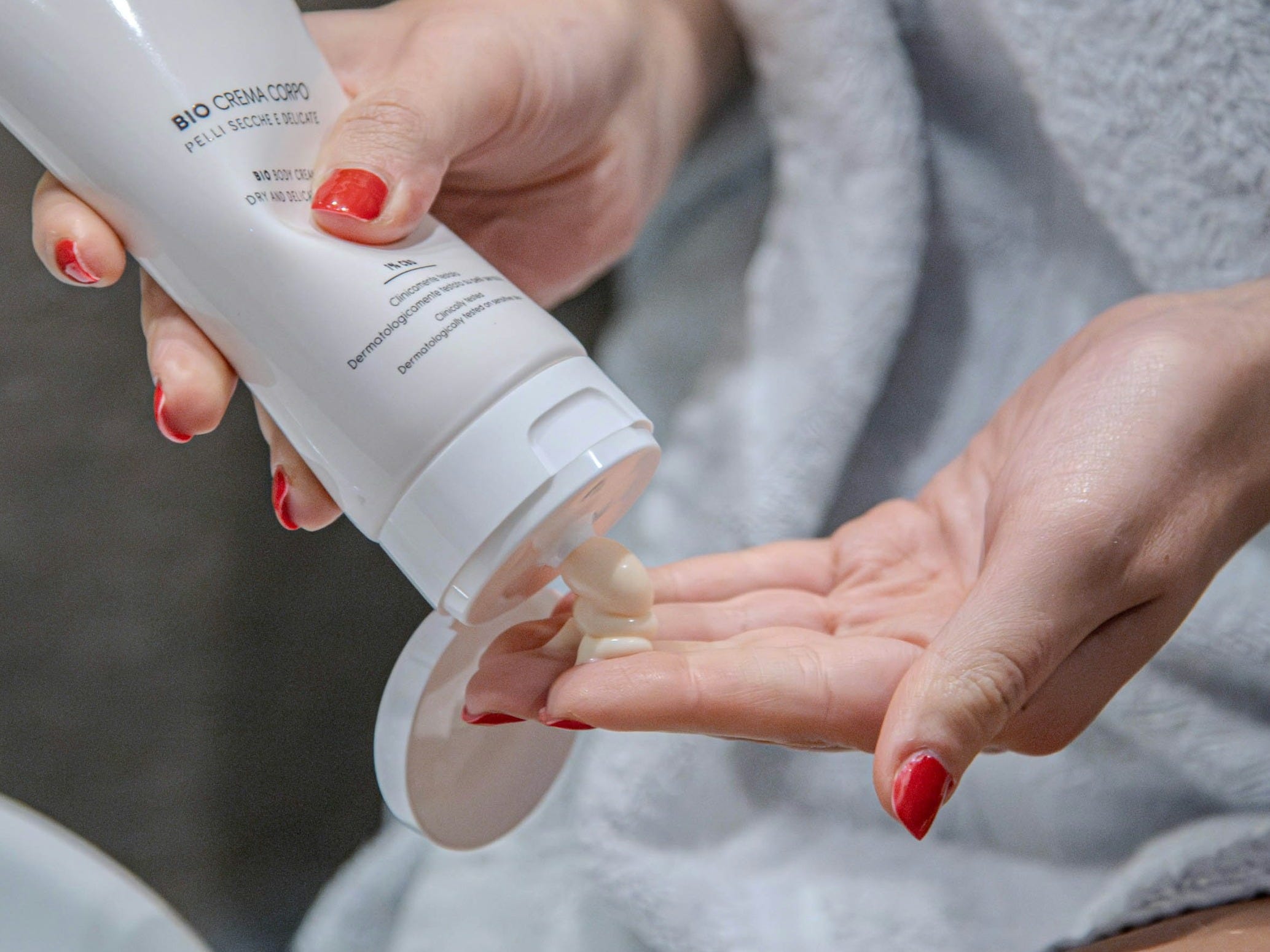
She was not only applying lotion but also inspecting her self. As her hands moved over her skin, she’d pause at certain spots, press her thumb into a muscle, tilt her arm to catch the light on a mark she hadn’t noticed before. She’d run her fingers along an old scar the way you’d feel the edges of your phone through your pocket, checking that it’s still there. She was having a conversation with her body in real time through touch.
When I asked her about it later, she tried to explain. “It’s not about the lotion,” she said. “It’s... I don’t know. It’s like checking in, making sure everything’s okay. If something ever happened, like if I needed a skin graft or something, I want to have options. I want my skin to be healthy everywhere.”
I laughed. “A skin graft? That’s very specific.”
She shrugged. “I don’t know. It feels good afterward. Like I’m... present. In my body.”
I slumped back on my pillow and noticed myself breathing easier, because I recognised what she was describing. She was practising embodied stewardship and had been doing it for years, without ever reading a single philosophy book or listening to a podcast about it. She’d absorbed it, probably from watching her mum and aunties when she was little, the way you absorb a song you’ve heard a thousand times without ever learning the words. Her body knew what my books had been trying to tell me.
Articulation is Overrated
I had been trying to teach my family the theory, but my wife had been practising the reality, and I’d been too busy lecturing to notice. That realisation carried a strange weight, something like the feeling of arriving at a party you didn’t know was happening.
So I stopped trying to explain the framework and started living it instead. When I felt stressed, I’d say out loud: “I think I need to eat something, I’m getting irritable.” When I was tired, I’d announce: “I need to go to bed.” These weren’t performances; they were honest reports from a person who had finally stopped pretending his body didn’t have a vote.
And something strange happened: my family started doing the same.
The Transmission
Delvin started noticing his own hunger signals. One day, out of nowhere, he said: “Dad, I think I need a snack. My tummy feels weird and I’m getting grumpy.”
I was standing at the kitchen counter when he said it, and I had to turn away for a moment because something in his voice, the casual certainty of it, the way he named what was happening inside him as naturally as he’d name the weather, undid me. I didn’t teach him that; he picked it up from the environment, the way a child picks up an accent.
Serena, when she’s tired now, will sometimes say: “I need to rest my body.” Not “I’m tired” and not “I don’t want to,” but “I need to rest my body.” She’s six years old and doesn’t know about the Astronaut and the Suit, but she’s already speaking about herself and her body as though they’re in relationship rather than fused into one thing.
And Phiona started pointing out when I was in a temporary possession. “You’re hungry,” she’ll say when I’m getting short-tempered, and I can hear the steadiness in her voice, the refusal to take my tone personally. “Go eat something and come back.” She’s fore-giving me, recognising the state I’m in and helping me get the Steward back in the driver’s seat before I add another line to the ledger.
None of this came from lectures. It came from practice, from creating an environment where attending to the body wasn’t weird or indulgent but was what we did.
The Builder’s Eye
This reminds me of something I learned working with Paul, a tradesman. We were building a staircase, and I’d screwed in a plank of wood that I thought looked fine, flash and square.
Paul looked at it once and said, “We’ll need to redo that one.”
“Why?” I asked. “It’s in the right spot.”
“Yeah,” he said. “But when you look at it from over here, it looks off. Like it’s wanting to go the other way a bit more.”
I was baffled. How could he see that, and how did he know where the wood “wanted” to go? He gestured to the fence, the walls, the posts, the floor. “When you line it up with everything else, you can see it’s a bit off,” he said.
He wasn’t looking at the block of wood in isolation; he was reading the context, feeling the relationships between all the pieces the way a musician hears the wrong note in a chord without counting the frequencies. He’d embodied the perspective of “squareness” to the point where he could see it instantly, and the gap between what was there and what should be there registered in his body before his mind caught up.
That’s what happens with stewardship. When you practise it long enough, you develop a kind of perception where you can feel when someone’s ledger is filling, sense when a family is losing coherence, and see the temporary possession before it becomes a crisis. You don’t have to explain any of it; you respond, you fore-give, you clear the static, and you help people tune back in. They feel it, even if they can’t name it.
The Steward’s Log
I don’t lecture my family anymore. I do those things, the sleeping, the eating, the check-ins, the conflict resolution, quietly and consistently, and I watch the ripple spread.
The paradox is that the more I tried to teach stewardship, the less anyone learned, and the more I practised it without fanfare, the more it spread. Not through persuasion but through resonance, the way a tuned instrument pulls nearby strings into harmony without touching them.
Delvin asks for what he needs before he gets frustrated. Serena rests her body instead of crying. Phiona catches my temporary possessions and sends me to eat before I add another line to the ledger. None of this came from teaching; it came from being.
That’s the ripple.

Questions for the Steward
The Practice: What’s one embodied practice you do regularly that you’ve never explained to anyone, like Phiona’s lotion ritual, and what would it look like to do it more visibly?
The Field: When you’re coherent, truly present and not hijacked, how do people respond to you differently, and have you noticed the ripple?
The Anti-Lecture: Is there someone in your life you’ve been trying to convince to change, and what would happen if you stopped explaining and started practising what you want them to see?
