

I was standing in a daily stand-up meeting, and I had no idea what Ellie was saying.
She was walking us through an “AS-IS” and “TO-BE” flow for a new feature we were building. Something about user authentication and database queries. Her voice was a quiet mumble in the background—present, but irrelevant.
I’d already given my update. My job was done. So I did what I always did: I retreated into my head.
I started rehearsing my task list. Review the login bug-fix. Refactor the API tests. Follow up with Jake on the technical analysis for a new feature. My eyes were on Ellie, but my mind was somewhere else entirely—planning, worrying, mentally checking boxes.
I was physically standing there. But I wasn’t present.
And then I felt it.
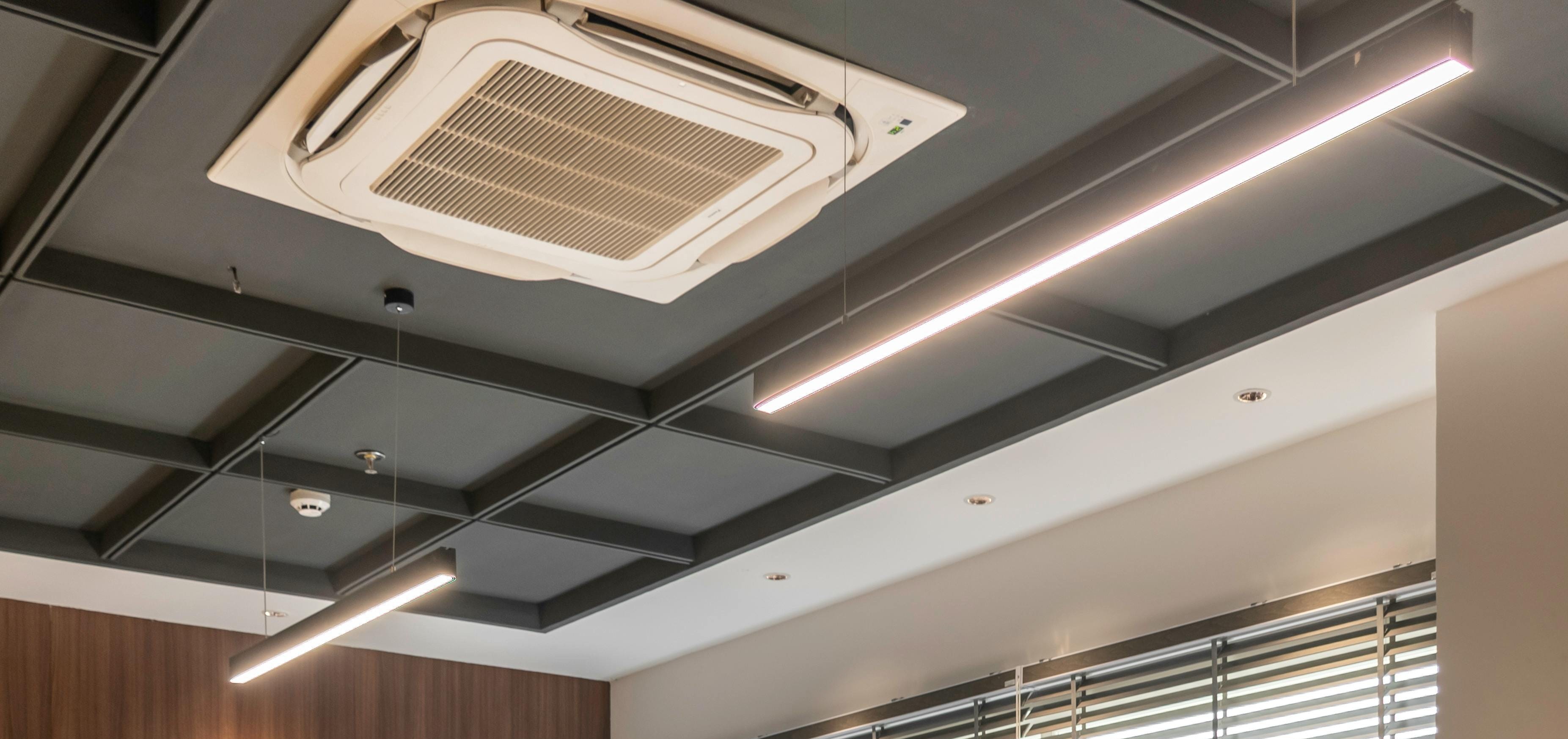
Cold air. Hitting the back of my neck.
I was standing directly under an air conditioning vent, and the blast of cold air was sharp and unmistakable. Normally, I would have moved slightly to the side and kept thinking about my to-do list.
But that day—for reasons I still don’t fully understand—I didn’t move.
I just noticed it.
The cold air on my skin. The slight goosebumps rising on my arms. The way my shoulders tensed slightly against the chill.
And something remarkable happened.
The moment I anchored myself in that physical sensation, all the mental noise—the task list, the worry, the rehearsal—vanished.
Suddenly, Ellie’s voice became crystal clear like an announcement at the airport.
I wasn’t just hearing her words anymore. I was understanding them. I could see the logic of her flow. I could feel the elegance of her solution. I understood not just what she was saying, but why it mattered.
For the first time in weeks of stand-up meetings, I was actually there.
The Hardest Problem
Later that day, I kept thinking about what had happened under the AC vent.
It wasn’t meditation. I wasn’t trying to “be present” or practice mindfulness. I had just felt the cold air, and somehow that simple act had cleared the channel between me and Ellie.
Years later, I learned that cognitive science has a name for what I’d stumbled into: The Frame Problem.
It’s the fundamental challenge of being human: The world is infinite, but your attention is finite.
At any given moment, there are a billion things you could pay attention to. The hum of the fridge. The itch on your ankle. The memory of yesterday’s conversation. The pattern of light on the wall. The email notification. The person talking to you.
If you tried to pay attention to everything, you would freeze. You would be overwhelmed by the noise.
To function, your brain has to filter. It has to ignore 99.9% of reality to focus on the 0.1% that actually matters.
The question is: How do you decide what’s relevant?
Usually, we don’t decide. We let the Pilot decide. And the Pilot—running on autopilot, on anxiety, on urgency—focuses on the loudest thing. The threat. The worry. The notification. The task.
But under that AC vent, I learned something: The Steward can choose.
Tuning the Radio
We often say we need to “pay” attention, as if attention is a currency we’re losing.
But under the AC vent, I wasn’t paying anything. I was tuning.
Think of an old radio, one that receives FM and AM. The music is always there, broadcast through the airwaves. But if your dial is slightly off-station, all you hear is static.

The Static: My internal monologue—the worry, the task list, the mental rehearsal.
The Signal: Ellie’s voice, her intent, the meaning behind her words.
The Dial: The cold air on my neck.
By focusing on the physical sensation, I tuned the radio. And suddenly, the music came through.
This is why we feel so disconnected even when we’re with people. We’re physically present, but our dial is stuck between stations. We hear their words, but we miss their meaning.
The body—when we actually pay attention to it—is the dial.
How the Pilot and the Steward listen
I’ve written before about the difference between the Pilot and the Steward.
The Pilot treats the body like a machine to operate. The Steward treats it like a vessel to care for.
But under the AC vent, I learned another distinction about how they listen:
The Pilot listens to solve.
When the Pilot listens, he’s scanning for problems. Listening for errors. Preparing rebuttals. Looking for what needs to be fixed, optimised, or controlled.
It’s efficient. It’s logical. And it completely misses the point sometimes.
The Steward listens to resonate.
When the Steward listens, he’s not trying to process information. He’s trying to tune in—to feel the intent behind the words, to sense what matters, to find the signal beneath the noise.
It’s the difference between reading sheet music and hearing the song.
The Pilot reads the notes. The Steward hears the music.
Failed Tuning
I’ve learned this lesson the hard way, over and over.
Remember the zigzag? I was so focused on running fast that I missed every signal the body was sending—the tight chest, the gasping breath, the pain in my calves. I tuned out the relevance until the body forced a veto and my legs gave out.
The hackathon floor was the same. I was so locked onto the code, so focused on the goal, that I filtered out thirst, fatigue, the warning lights flashing on the dashboard. I tuned out everything except the task until the system shut down and I woke up on the floor.
Both times, I wasn’t choosing what mattered. The Pilot was.
And the Pilot—running on urgency, on ego, on autopilot—has terrible judgment about what’s relevant. In their defence, they are doing the best that they can, responding to an emergency.
The AC vent taught me the opposite: how to choose what to tune in to, before the body has to pull the emergency brake.
The Body as Antenna
This brings us back to the body.
In the first article, I talked about the body as a Suit—something to monitor and steward carefully.
In the second, I learned the body holds veto power—it will force you to stop if you push too hard.
In the third, I discovered the body is an economy—it tracks every transaction and always balances the books.
But the AC vent taught me something else:
A coherent body isn’t just solvent. It’s well tuned.
When you’re running a deficit—exhausted, hungry, burnt out—your body is screaming for resources. That scream is the static. The low-battery warning drowns out everything else.
You can’t tune in to your spouse, your work, or your joy because the noise is too loud.
But when you anchor yourself in a physical sensation—the cold air, the pressure of your feet pressing on the floor, the rhythm of your breath—you’re not adding more noise. You’re acknowledging what’s already there.
You’re clearing the channel.
A well-stewarded body isn’t just healthy. It’s available. It can tune in. It can find the signal. It can pay attention to what actually matters instead of what’s merely urgent.
This is the positive pursuit of embodied stewardship. We don’t just take care of the body to avoid crashes. We take care of it because a coherent body is the antenna for a meaningful life. With a good antenna, you are always receiving a clear signal of where you are and how you are. This makes it very clear for you how to be in each moment.
The Steward’s Log
That meeting with Ellie was eight years ago. It was a mundane Tuesday morning in an office I no longer work at, talking about a feature that’s long since been deprecated.
But I remember it perfectly.
Why?
Because for five minutes, I was actually there.
Since that day, I’ve learned that tuning isn’t just a meditation trick. It’s the primary tool of leadership, parenting, and love.
When I’m with my daughter and I feel my mind drifting to my phone or my task list, I use the AC vent technique.
I find a physical anchor—the feeling of my feet on the floor, the warmth of her hand in mine, the sound of her breath, the light in the room.
I tune the radio.
And suddenly, she isn’t just a toddler making noise. She’s a person unfolding in real-time. She has intent. She has meaning. And I can hear it—if I’m tuned in.
The world is loud. The static is constant.
But you have a dial.
And the music—the meaning, the connection, the moments that actually matter—it’s already there.
You just have to tune in.
Questions for the Steward
The Static: What is the noise currently drowning out your life? Is it internal (worry, planning, rehearsal) or external (screens, notifications, busyness)?
The Dial: Right now, find a physical sensation. The pressure of your body pressing against the chair you are sitting on. The temperature of the air on your skin. The rhythm of your breath. Focus on it for ten seconds. Did the static quiet down?
The Music: Next time you’re with someone you love, try to tune in. Don’t just listen to their words—listen for their intent. What music are they playing?

I have found myself drifting from necessary conversations for various reasons like the person presenting uses one tone of voice making it hard to engage with what they are saying or they don't have breaks in their speech or I need a dose of some dopamine because it has been hard getting to this meeting. With the steward analogy, I have found I have to choose wisely and turn my AC vent on to focus. It usually involves convincing my self that what I am hearing will make my life easier in the future, I will find my dopamine shots waiting for me unless the Internet chooses to get destroyed. I will build this relationship and have a connection for life which is more beneficial in the long run.These are my AC vents.
Interesting listen